


What’s New?
Author’s Note.
We have big ambitions for TEE™ and are carefully iterating as we aspire to deliver the #1 publication for Design & Business. So, this week we’re trying something different.
Rather than produce a standalone article, we’re evolving the publication into a more comprehensive newsletter. We don’t want to become noise in your life and spam in your inbox. Instead, we want each issue to land well, and for you to be excited to read and share our content.
We’ve introduced a New This Week section which contains hyperlinks to each heading within the newsletter. We’ve also added an Author’s Note to each issue, so that we can bring you personal takeaways, musings, and reflections on the week’s content, whilst shielding the main article. Future editions will also contain an Editor’s Note for an alternative viewpoint.
Wellness is close to our hearts. For that reason, we’ve introduced Get Well Soon where we suggest practical steps you can take to improve your mental and physical wellbeing.
The body of each publication will be the title post for that issue, i.e. Your Calendar Knows How You Feel. We summarise the article’s Key Takeaway as a dedicated feature, so readers short on time can jump to the main point.
So that you can follow along with what our team enjoy reading, each week we will present our Book of the Week recommendations. Let us know what you think!
Ultimately, our readership makes the publication what it is. We want to show our gratitude and appreciation to you whenever we can. Where relevant, our issue will deliver a note, comment, suggestion from, or a shout-out to, one of our treasured readers in What Our Readers Say.
Our lives are busy and it’s easy to miss great content when it first lands. So, each week we collate a few of our favourite editions and include them for your interest in TEE™ & Coffee. We believe that if you enjoy this article, you’ll probably like one of these others too. So, grab your coffee, relax, and read on.
For our paid subscribers, future issues will bring unique content available just for you. The paid content will deliver value above and beyond the baseline newsletter. We want to ensure our paid subscribers and fellows feel valued and see measurable return on their investment.
We’re constantly evolving our publication to ensure that TEE™ is worth the time and money you so generously spend. Please leave any thoughts and feedback you have, to bring TEE™ the next level.
Stay thoughtful.
James.
Words That Move Us.
When solving problems, dig at the roots instead of just hacking at the leaves. - Anthony J. D’Angelo
Your Calendar Knows How You Feel.
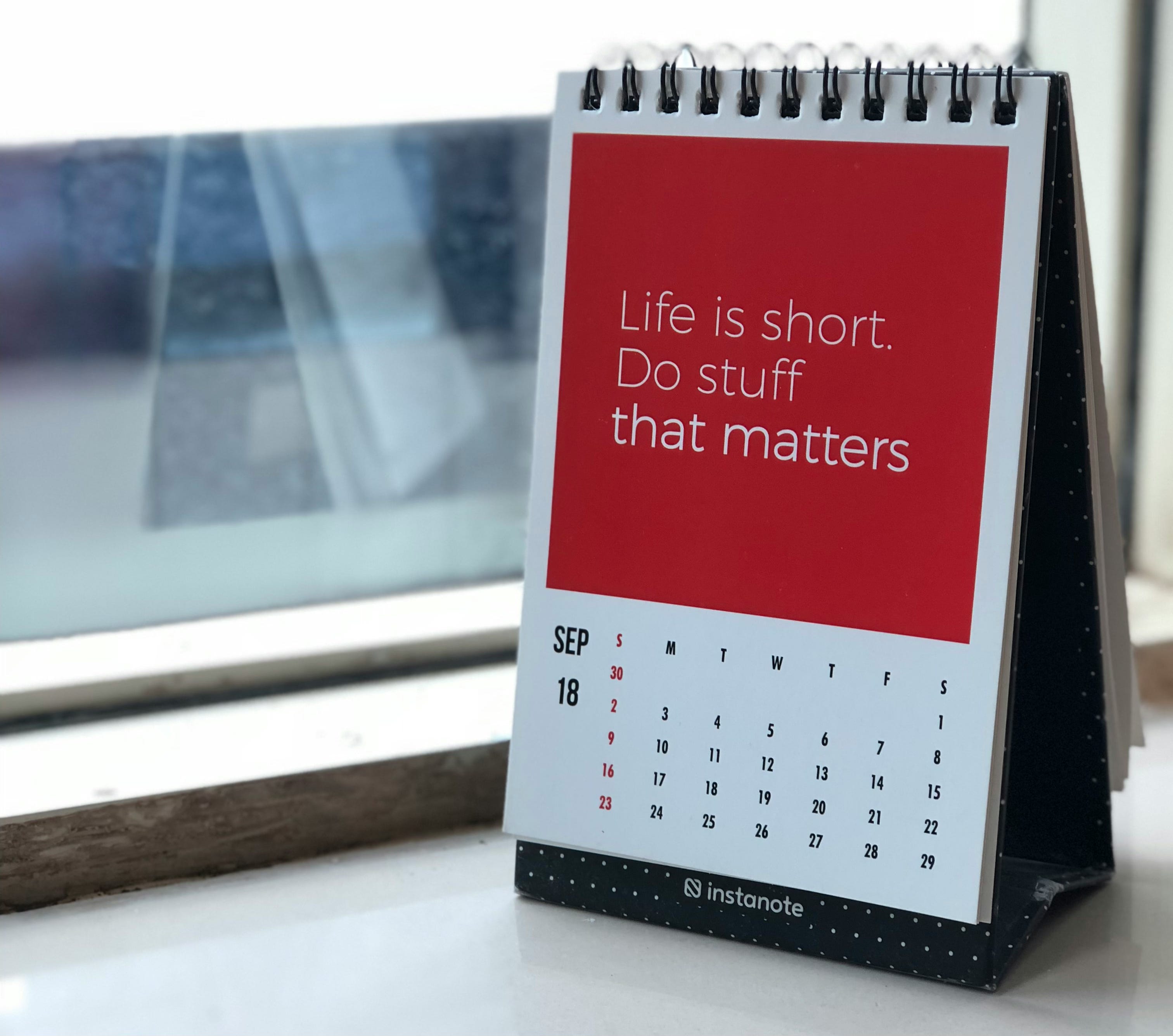
Are you happy at work?
How many tasks do you despise?
Which activities would you happily delegate?
Every job is a mix of good and bad. There are activities we love, those we detest, and others we endure. You must identify which bucket you place a given task in, because this is the first step to restoring work satisfaction. If you spend a greater percentage of your working hours on activities you intrinsically enjoy, then your odds of workplace satisfaction increase sharply.
A trick I developed was to use my work calendar as a sentiment journal. I already categorise my calendar by colour, corresponding to labels such as ‘Deep Work’, ‘Meeting’, ‘Mentoring’, ‘Travel’, etc. Within Microsoft Outlook and Microsoft Teams you can create colourless labels that exist in the metadata but do not change the appearance of the calendar entry. Since you can apply multiple labels to a given calendar entry, it’s possible to combine a coloured label (i.e., for a meeting) with a colourless label for augmented insights.
In the past, I created a colourless label titled ‘Automatable’ so that I could identify how many tasks per week could hypothetically be delegated to AI or automation. I periodically export the calendar entries to analyse the percentage of time I spend on activities that AI or automation could, and probably should, have actioned for me.
Whilst this is great for enhancing your productivity, it doesn’t help you to identify whether you actually enjoy those tasks that remain. What if you took the concept a stage further and created labels corresponding to your feelings towards a given task? For example, ‘Love’, ‘Hate’, ‘Boring’, etc. Retrospectively, you can analyse the percentage of your time spent on tasks you really enjoy (and those you’d happily forget).
This strategy delivers several advantages:
We tend towards all-or-nothing thinking, so it’s easy to conclude that your job is either really amazing or entirely awful based on recency bias (i.e., how you feel about recent events). If you’ve had a week filled with tasks you love, then you’ll likely feel positive about your work. If not, you may believe you need a job change. However, if you can assess your week more objectively, on a task-by-task basis, and see where you’re actively spending your time, it becomes easier to evaluate how good or bad your job really is.
You may see patterns where certain activities (or people) make your week better or worse. Once you identify the underlying reasons for why you’re feeling a certain way, you can take steps towards designing your calendar more intentionally. Where possible, you can orient your time towards the work and people you like, whilst limiting your time on that which drains you.
You may identify opportunities for automation. For tasks that you dislike or feel that you don't bring value to, it raises the question of whether you’re the right person to be completing that task to begin with? Perhaps a colleague, an AI agent, or a Python script could be more effective?
Active reflection on your working week helps with memory and processing. We often skip from one task to the next without evaluating our performance and our experience of the work we’ve delivered. Taking time to mark each calendar entry with your sentiment towards it, as soon as practicable after you’ve completed it, provides a more honest and accurate assessment of how you’re feeling about your role. It can offer insights that are valuable for future conversations with your Line Manager and help you to understand the kinds of work you’d be a great fit for.
The calendar export, with the various markers, can also be a powerful diary for your favourite Large-Language Model (LLM) to analyse. This is precisely the kind of task that AI does better than humans: unpicking patterns that we’re inclined to miss. Ask ChatGPT, Copilot, or Claude to provide insights on your work. Poke and probe the responses to dig deeper.
Solving a problem we don’t understand is impossible. If you don’t know the drivers that make you feel a certain way, then you’ll be hard-pressed to resolve them. Whether you love your job, or detest it, it’s helpful to know why.
Breaking down your working week into time and activity blocks, and then proactively marking each with your feeling towards it, gives you hard evidence that you can use to take effective action. If you’re happy, then great: you’ll know why and can do more of the same. If you’re miserable, you’ll also know why and can start making a change.
Life is too short to be miserable longer than necessary. The trick is knowing what you’d rather do instead and pivoting in that direction. See our Book of the Week recommendation to learn how you can take concrete steps in a better direction.
Key Takeaway.
Create colourless labels in your calendar that reflect your sentiments.
Assign each calendar entry a label to build a picture of how you’re feeling.
Export your calendar periodically and analyse the narrative.
Try to understand why you’re feeling the way you are.
Take steps towards the positive.
Get Well Soon.
As part of my day job, I’m an office Wellbeing Champion. On a bi-monthly basis, I give a short, honest briefing to around 200-300 colleagues on how they can make positive changes to their work- and home-lives.
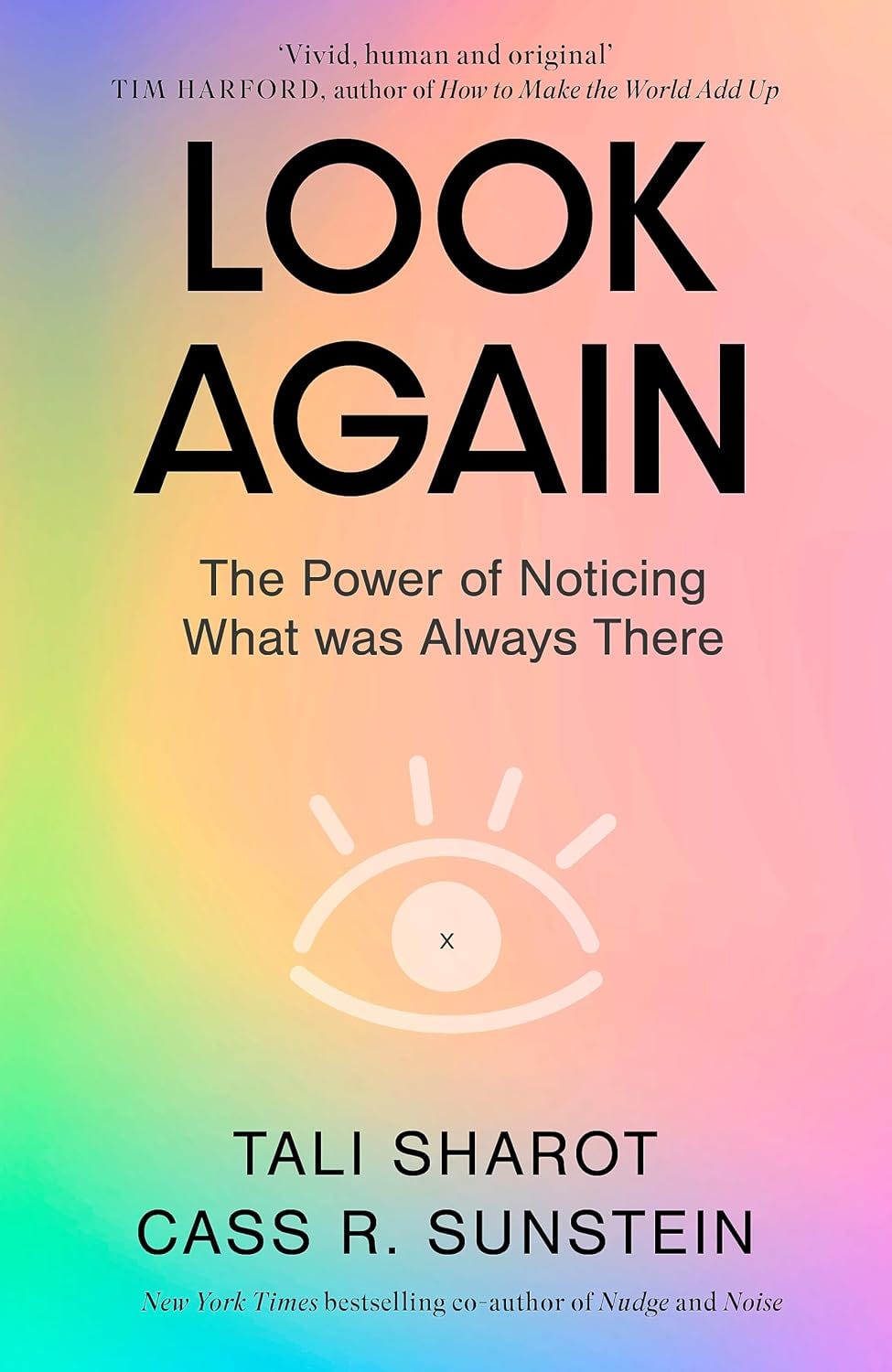
During today’s briefing, I discussed the theme of habituation, inspired by a book I read titled Look Again by Sharot, T. and Sunstein, C. The authors argue that habituation - the process of acclimatising to your current conditions until they become the norm - has pros and cons.
It’s a normal human reaction, and it’s great when you’re in difficult conditions, because it reduces the subjective intensity and severity of whatever it is you find painful. If you’re unpopular at school, you’ll eventually come to accept it (as I did!) and it won’t bother you quite so much each day.
Unfortunately, we also habituate to good things in our lives and we quickly forget how we felt before we had them. For example, in our office we have several decent coffee machines. But over time our staff habituated to having the machines available and now just complain about the quality of the coffee. They forget that for many workers free coffee, and especially a dedicated machine, would be a real treat and novelty. Unfortunately, for my colleagues the novelty’s worn off… They’ve habituated.
The same mechanism is at play when:
We take our loved ones for granted,
You lose interest in a job that you were originally so excited to secure,
A holiday abroad is now an expectation, where before it was a treasured luxury.
So, what’s the fix? Well, I don’t want to spoil the book entirely. But, crucially, it’s taking the time to notice what was always right in front of you. Practice gratitude. Thank your loved ones. Show appreciation to your team. Remember how you felt before you secured your current job. Perform mental gymnastics and travel back, in your mind’s eye, to a worse time in your past that you’re now relieved is behind you.
Ambition and aspiration are obviously good traits. Human society evolved precisely because habituation to our environments kept us striving for better. But just remind yourself, periodically, that whilst better is on the horizon, worse is in the rear-view mirror. So, wherever you’re sitting today and whoever you’re sitting with: be appreciative. Look again.
Book of the Week.
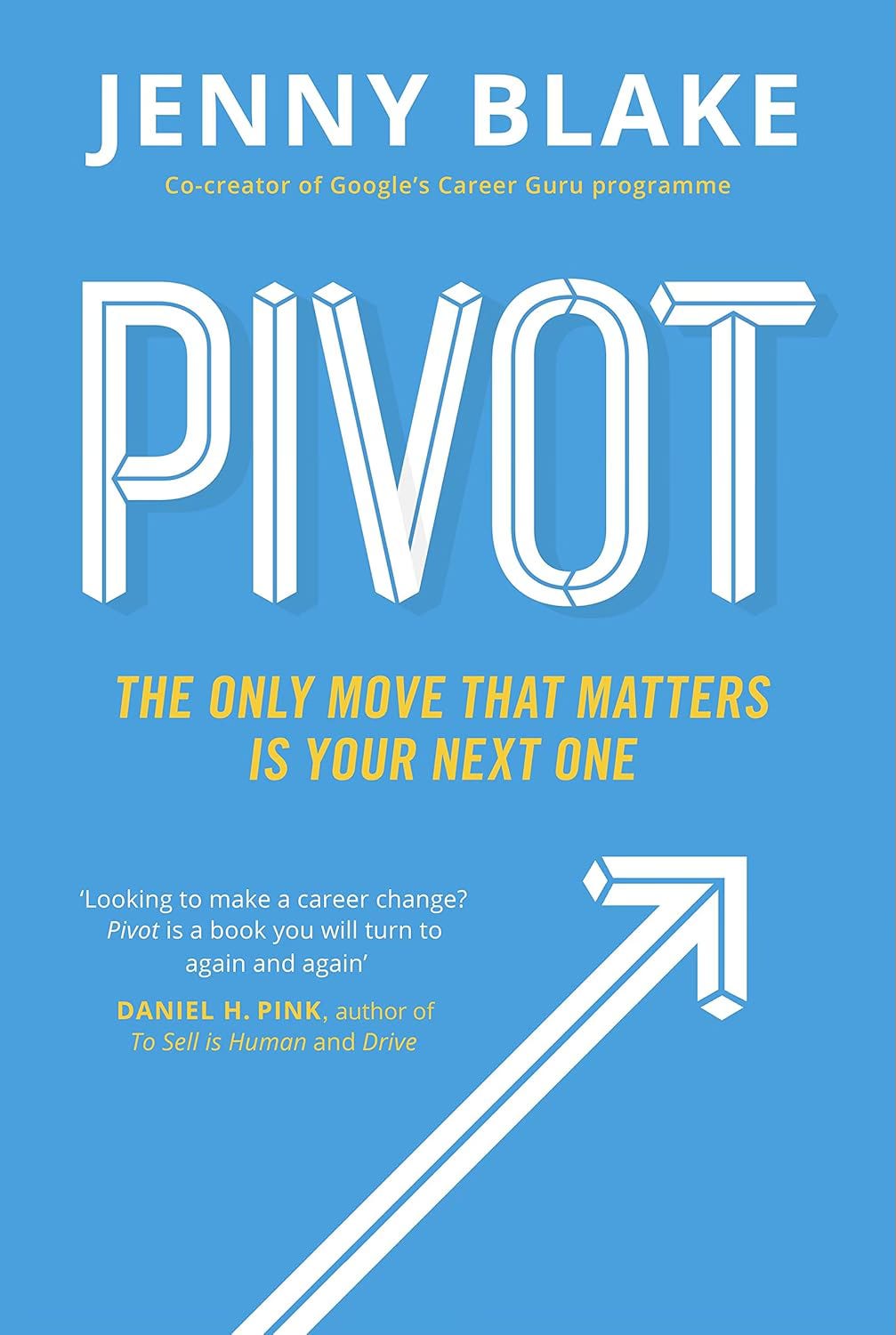
If you’re interested in making a change but don’t know where to start, you might like to read Pivot by Jenny Blake. I’m not sponsored; it’s just a book I’ve returned to time-and-time again whenever I’ve needed tried-and-tested advice.
The (Un)splash Zone

My partner, Sabrina, and I spent nine wonderful days in Barcelona at the end of June. We were recommended to visit the Olympic Pool at Montjuïc. I think you can see why. An absolutely stunning city view, a bustling venue, and a gold-medal experience. What you can’t see behind me are the bars and restaurants that sit at street level, overlooking the pool. The pool entrance is just a short walk after you exit the cable car that brings you up the mountain side. I’d highly recommend checking it out. It was certainly a highlight of our trip.
You can find more independently approved photography on my Unsplash.
What Our Readers Say.
I received very insightful feedback from mogtaba eldirdieri , who said that he found my thoughts on work, career, and professional development particularly valuable. So, I’ve decided to spend more time writing honestly about these subjects. In fact, in future editions I intend to dedicate an entire section (for paid subscribers only) on this topic. I hope you’ll find it both helpful and relatable. Thank you mogtaba eldirdieri for your support and suggestions! We’re beyond grateful.
TEE™ & Coffee.
Our lives are busy and it’s easy to miss great content when it first lands. We get it. So, each week we collate a few of our favourite editions and include them here for your interest. We believe that if you enjoyed this article, you’ll probably like one of these too! So, grab your coffee, relax, and read on.


I really like this new format. You should start applying it to articles like "Life Is Hard, Social Media Makes It Look Easy." I think breaking that article into clear points would make it even more powerful and easier to follow.
Try it and let's see how it works!