

I’m going to make a bold and depressing prediction: regret is on the horizon for a large percentage of our population, and our social media habits are partly to blame.
It will come as no surprise that too many people spend too much time looking at too much content of too little consequence. We invest our finite time, energy, and attention scrolling through endless reels of visual noise and psychological pollution.
We lovingly begin each day with an intoxicating dose of novelty and stimulation, denting our focus before we’ve even left bed and often damaging our mood in the process. Then, at night, we inject another dose for good measure, elevating our anxiety just enough to interfere with our precious sleep.
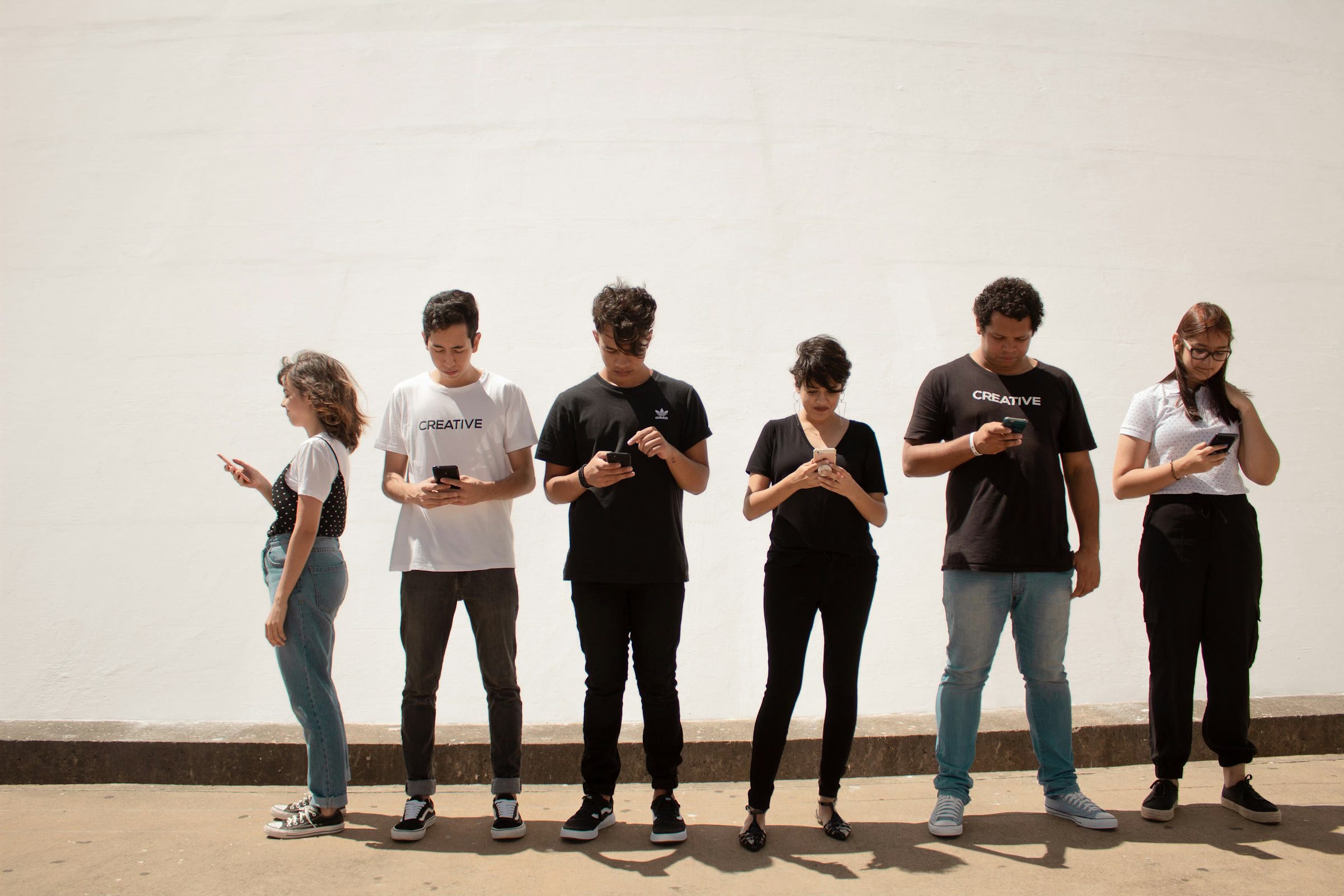
If we’re out and find our hands empty and our minds momentarily idle, we reach for our phones as if they were boxes of cigarettes. In one smooth motion, facial recognition unlocks the device and grants us access to the wonderful world of endless refresh.
It doesn’t matter that we read that post or watched that video thirty seconds ago. Far better to waste another moment of your life than experience the fear of missing out when your favourite influencer announces their latest side hustle, new online course or luxury getaway, or promises that this year they’re going to be more ‘real’ with their followers, remain present and spend more time offline.
Yes, evidently. Sigh.
The irony is that influencers are among the clearest beneficiaries of your social media habit. They profit from your views, comments, and reactions. They produce content and build courses in direct response to their audience’s engagement and avowed interests. Who needs market research when your prospective buyers tell you what they want whenever you ask, eh?
The most successful influencers become wealthy and famous, living what appears to be the life of their dreams, while you risk wasting your own talents, skills, and efforts honouring your acclaimed leader like a good follower should.
I mean, even the word follower is quite distasteful when you consider it. It reeks of religious connotation, as though influencers have been anointed by holy powers above.
Of course, I understand that many of you aspire to build your own social media followings and eventually monetise them. You want to model yourselves on the influencers you readily follow. It makes sense. If they can do it, why can’t you? I thought the same.
The creator economy looks fun and lucrative. It is the modern-day supermodel: a highly visible aspiration that appears to bring status, love, and boundless attention. The problem is that one day your preferred social media platform may be considered obsolete or, dare I say it, dated.
Young people will eventually talk about Instagram, X and TikTok the way many people in their twenties and thirties now talk about Facebook. Your platform may struggle to attract new users, while existing users remain only out of habit.
If you have accumulated a decent following on one platform and it loses its appeal, what do you do next? If you haven’t successfully built an audience you can reach independently, outside a walled garden controlled by one of the world’s largest technology companies, you could lose your monetisation model, your community, and your popularity remarkably quickly.
This is not merely scaremongering. TikTok briefly went dark in the United States after the Supreme Court upheld legislation that threatened its continued distribution unless it underwent a qualified divestiture. In the UK, OnlyFans has faced substantial regulatory scrutiny, including a £1.05 million Ofcom fine for providing inaccurate information about its age-assurance measures.
Neither example means those platforms have disappeared. They do, however, demonstrate the same underlying vulnerability: when your livelihood and audience sit on infrastructure you neither own nor control, decisions made by governments, regulators, and platform owners can alter your prospects overnight. We’ve already watched once-dominant platforms such as Myspace and Vine fade or vanish.
If your content is built atop a platform that insulates its users from the outside world, you are at risk. If, by the time you realise this, it’s too late to do anything about it, what do you do?
And what about all the time you dedicated to building a following, watching content, leaving comments, and updating your profile? Was it all for nothing? Maybe.
Then comes the regret. That deep, stomach-churning regret that you missed out on connecting in the real world because you were fixated on the virtual one.
You remember all those moments when you ignored your friends at the dinner table while replying to a DM. Or when you ruined a day with your partner or family because you saw something online that derailed your emotional state and sent you into an anxious spiral.
Gym-goers lift their weights for the current set and then flex their biceps once more to pick up their phones during the rest period. At least they’re getting an extra curl between sets, right?
You are burning far too much candle wax from your short stick of life trying to impress people who don’t even know who you are. We love to believe we’re living in a soap opera, complete with a backing track playing beneath the story of our lives.
We sell ourselves constantly and hope the world notices and approves. We do it today. Then tomorrow. And the day after.
We participate in an endless cycle of validation-seeking behaviour, trying to prove, even to ourselves, that we are living a socially acceptable life. Except there is nothing socially acceptable about ruining your in-person relationships and experiences while seeking affirmation from the faceless masses.
Just Do It.
Carpe Diem.
Because You’re Worth It.
Think Different.
All highly recognisable phrases encouraging you to go forth and live your best life. But are you? Or does your screen-time report suggest you’ve spent longer than a workday cycling through your favourite apps?
Unless you consciously decide to change your behaviour, you may one day arrive at the painful realisation that too much of life passed you by while you consumed content that rarely made you happy. Content that made you feel terrible about yourself. Content that encouraged rumination and obsessive behaviour. Content that invited you to compare your entire existence with everyone else on the planet, and then feel surprised when someone, somewhere, appeared to have a better life in one or two narrow dimensions.
The full richness of your life is denigrated when you compare it with the carefully selected highlights of someone you’ve never met who happens to look great on a beach. The world we’ve built for ourselves is bonkers. And it’s broken.
Yes, there is obviously some utility offered by social media. Used as a tool, in the right way, it can, and often does, unlock real, tangible value. You can run a campaign, raise money for charity, notify friends and family about a funeral, or connect with business colleagues without requiring everyone to carry two hundred business cards wherever they go. These functions matter.
However, for many people, these purposeful use cases account for only a small proportion of the time they spend on the platforms. Far more of their attention disappears into the doomscroll. I mean, it literally has the word doom in it, yet it has become cute, casual parlance, as though this behaviour is entirely normal and simply something to be expected.
I turned thirty-two this year, and Facebook has been around since I started sixth-form college. Strangely, it is difficult to remember what we did with all our time before social media, and why we bothered to do anything at all.
Nowadays, it hardly seems worth doing something unless you can create a photo opportunity and share it with your network. We all do it. It has become second nature.
If we don’t capture a great photograph of our holiday, it was basically a wasted trip. It doesn’t matter whether you enjoyed yourself, so long as the world believes you did. We are the curators of our own personal galleries. We choose the artwork. We choose the branding. We design the experience. Then we encourage visitors.
And, like many galleries, we don’t even charge for the pleasure. Please, walk right in. Just don’t scroll too far back, because I wrote an unacceptable tweet in 2012 from which I am now completely dissociated. I was young then and, you know, YOLO. #naive.
I remember going on holiday and spending most of the day refreshing my Instagram feed to see whether I had received any more likes on my latest photo. If it performed well, it was a great day. If it didn’t, I became withdrawn and depressed, convinced that the world found me unattractive and that I would never find love.
Weirdly, almost everyone I speak to suggests that they felt something similar. So, at least we can bond over our shared dislike of ourselves. Parents must despair.
And it goes far beyond holiday photographs. The urgent need to impress our networks invades our decision-making at every level.
Choosing your university degree? Deciding where to get married? Which job should you take? Which car should you buy?
These have always been difficult questions, but now we’re so tangled up in public metrics that a muted response to an announcement can convince us we’ve made the wrong decision entirely. You assume everyone is talking about you, laughing and cackling about just how embarrassing your life is.
I wouldn’t worry. Nobody is laughing. They’re all too busy ruminating over the poor performance of their own posts.
It begs the question: is anybody truly happy on social media? Besides the influencers, perhaps, although they often seem to be just as unhappy.
It is difficult to feel satisfied when everything you do is immediately outperformed by someone else. You can work for months towards one important moment of success, finally announce it to the world and watch as your carefully curated post is quickly pushed aside as yesterday’s news, sinking towards the bottom of the feed.
There is always another announcement. Always someone doing better. Always somebody younger, richer, fitter, happier or more successful. At least, in the narrow frame they have chosen to show you.
I’ve been pondering recently just how different people’s lives might have been had social media never existed. Would they have remained in closer contact with their authentic desires and intrinsic motivation, and therefore followed career paths better suited to them? Would they have taken that holiday somewhere they didn’t really care about visiting, simply to show everyone they had gone?
Who would they have dated? Who might they still be dating? How many reckless or rash decisions have been made simply to impress followers?
It is very difficult to remain connected with your truest desires while you are being bombarded by signals about what everybody else appears to want.
Celebrities warned us long ago that fame brings perks but also scrutiny, pain, and the constant sensation of falling out of favour. You reach the top of the mountain for one brief window, then spend the rest of your career living in the shadow of your own success, never quite reaching that pinnacle again.
Social media has distributed a smaller version of this experience to almost everyone. It skews our behaviour. It skews the projects we choose to pursue. It makes us feel that we must identify the best possible career, lest we appear inferior to everyone else on the internet.
We humans also struggle to comprehend the numbers attached to our social networks. One hundred followers feels like very little. But if you stood on a stage and announced your views to one hundred people in a room, wouldn’t you feel a little daunted?
It would also be quite an honour if one hundred people voluntarily sat and listened to what you had to say. Through the lens of social media, the numbers become meaningless.
More is never enough. We chase constant growth. If the metrics don’t show an upward trend, something must be wrong. But we rarely stop to consider what the maximum audience for a genuine real-world following might look like. Eventually, you must reach the limit of the number of people in the world who sincerely care about your niche content.
Then there is the challenge of maintaining high levels of positive affirmation from your followers. Your views, your thoughts, and the quality of your content become distorted by your need to perform.
Once you start performing for likes, you are already on the path towards producing your own version of ‘slop’. Your followers were probably attracted to the quality and authenticity of your original work. But as your content shifts towards attention-grabbing one-liners, capitalised words, sensational remarks and increasingly radical points of view, your audience may grow weary of what you have to say.
Eventually, you lose your way. It becomes a downward spiral unless you steady the ship.
I get tired of seeing the same people peddling the same content repeatedly, purely to maintain ‘relevance’ on the platform, remain visible in timelines and stay ‘on brand’. It often feels as though a top influencer discovered one particular viewpoint that resonated with a large audience and then decided to repeat that same thing every day for the rest of time.
It’s boring. It’s uninspiring. And it’s fatiguing.
Yes, there are certainly benefits to social media. I’m sure you convincingly remind yourself of them each time you reopen your phone. That said, do the benefits outweigh the costs? And do you really need to check your phone again today?
The people who truly love you probably text or call. And your boss uses Outlook anyway.
I’m sure you could reduce your social media visits to once or twice a day. And no, not first thing in the morning, so you can dose yourself with anxiety before you’ve even pulled on your slippers. Nor last thing at night, so you’re tense, wide awake, and unable to sleep.
I’m not preaching from an ivory tower. I read Digital Minimalism by Cal Newport, and it resonated with me. Newport advocates deliberately stepping away from optional technologies before reintroducing only those that genuinely support the life you want to live.
I knew social media was making me unhappy, so I decided to remove the apps from my phone. I now use LinkedIn only on desktop. I stopped using Facebook and Instagram some years ago, and no, I don’t miss them.
The only social platform I keep on my device is Substack, and that is largely so I can see how my articles render on mobile. I’ve considered removing that app too.
Since making these changes, I’ve discovered that I’m calmer and less affected by other people. I feel less ‘behind’ when influencers post about their miraculous lives. I fill more of my time with richer content, such as books.
I also feel far less desire to perform for likes. As a result, I am more in tune with who I am and what I want.
And, to be honest, I’m not missing much. I still take photographs, and my phone curates them nicely in my photo library. Editing software is now built into the phone’s native photo app and, for my purposes, it is at least comparable with what Instagram once offered me.
The only time I notice the absence of the LinkedIn app is when someone asks to connect at an event and I can’t scan their QR code. Otherwise, I have literally zero use for the app itself.
If abandoning the apps feels too difficult right now, that’s fine. The next best step is to reduce the surface area available for potential negativity.
If opening your news feed or highlight reel fills you with dread and anxiety, I’d suggest that your digital environment is not especially healthy. You would do well to unfollow the sources of anxiety your feed repeatedly presents to you.
I did. It made a huge difference.
Less noise. More signal.
I kept only the people I genuinely admire and whose work improves my outlook. At the very least, that greatly reduced the likelihood of an idle scroll ruining my mood.
Removing the apps has not made my life smaller. It has given more of my life back to me. I’m calmer, less performative and less preoccupied with whether somebody else appears to be ahead. Most importantly, I can hear my own preferences more clearly.
Perhaps that is the real cost of social media: not merely the hours we surrender to it, but the distance it creates between who we are and who we might have become without an audience watching.
So, put the phone down for a while. Not because everything online is worthless, but because your attention is worth protecting.
Then ask yourself: without the feed, the metrics and the performance, what would you choose? And who might you be if social media had never existed?
Stay thoughtful.
James.
I really like this new format. You should start applying it to articles like "Life Is Hard, Social Media Makes It Look Easy." I think breaking that article into clear points would make it even more powerful and easier to follow.
Try it and let's see how it works!